


Axle configuration affects traction, operating cost and the type of trailer a tractor can pull. The right choice depends on route conditions and legal weight limits rather than on horsepower alone.
What does 4x2 mean?
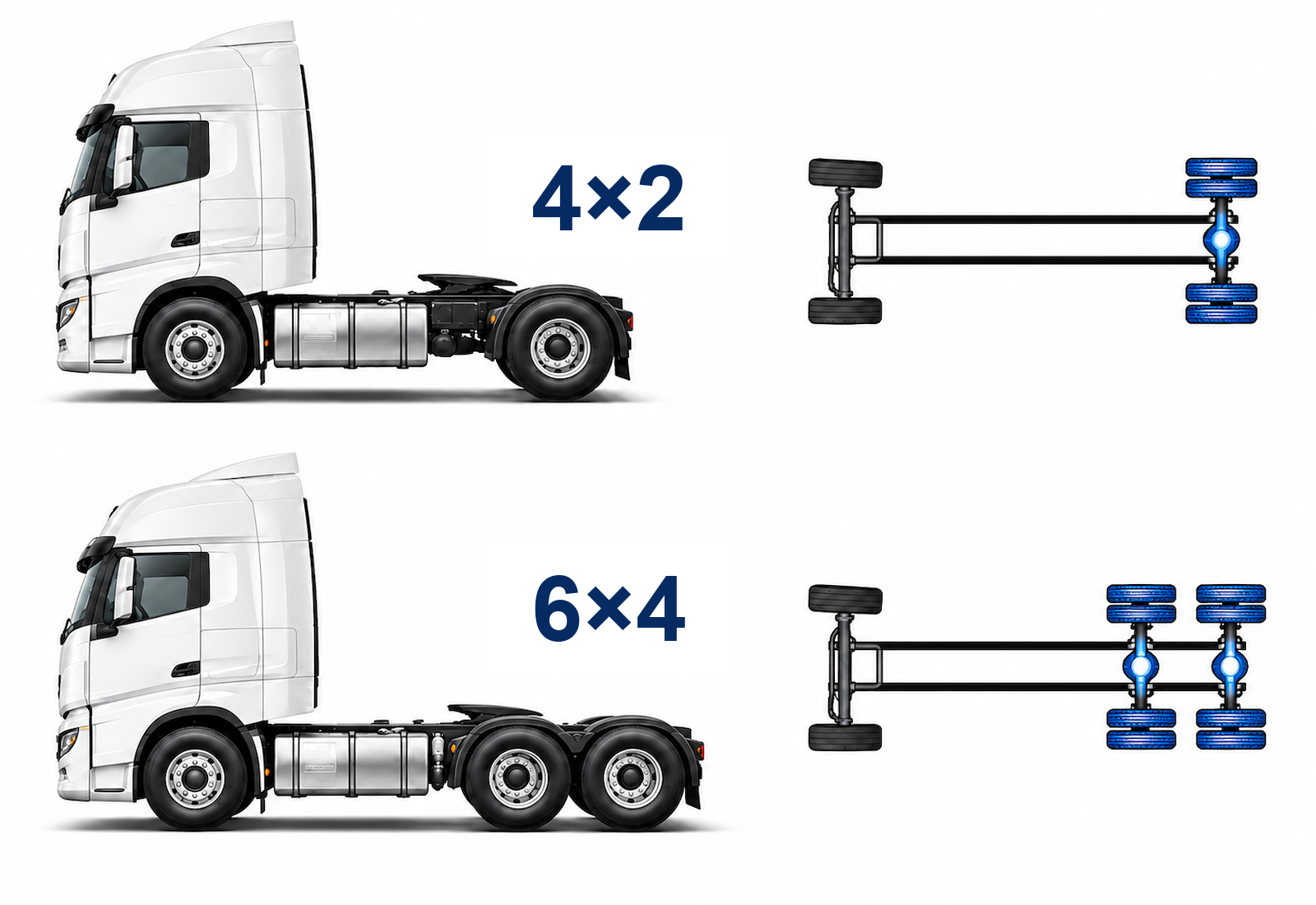
A 4x2 tractor normally has two axles with one driven rear axle. It is lighter and is often selected for paved highways, moderate loads and routes where fuel efficiency and lower tare weight matter.
What does 6x4 mean?
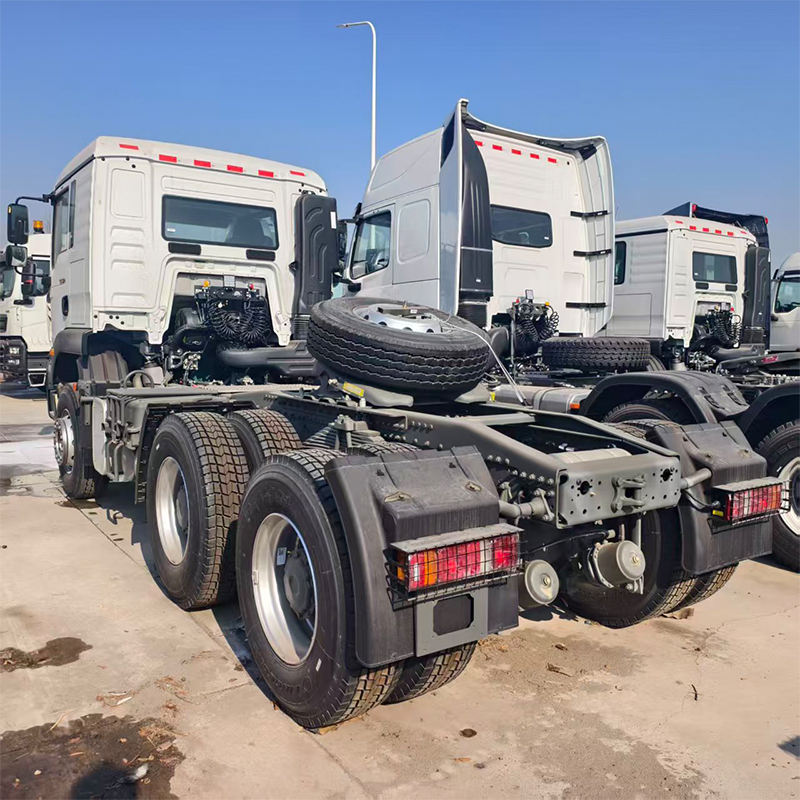
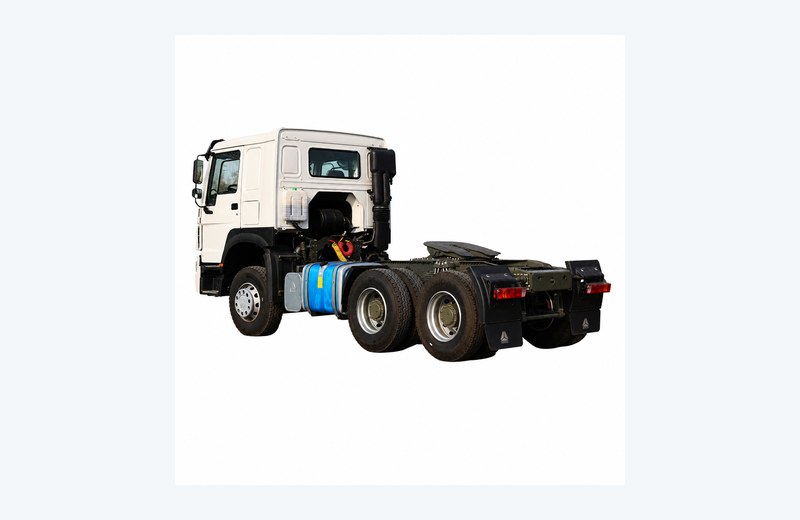
A 6x4 tractor normally has three axles with two driven rear axles. It offers more traction and is widely used for heavy cargo, uneven roads, construction transport and demanding gradients.
Key comparison
| Factor | 4x2 | 6x4 |
|---|---|---|
| Traction | Suitable for good paved roads | Better for loose or uneven surfaces |
| Tare weight | Lower | Higher |
| Fuel use | Usually lower | Usually higher |
| Typical work | Highway and lighter duty | Heavy cargo and difficult routes |
Other details still matter
Compare engine rating, gearbox, axle ratio, fifth-wheel height, tire size, wheelbase and braking system. The destination country's axle-load rules may determine which configuration is practical.
Information to send for selection
Provide cargo type, gross combination weight, trailer type, road condition, gradients, annual mileage and destination port. The supplier can then recommend a configuration instead of guessing from the model name.
Compare available tractor trucks or send your route and load requirements.


 whatsapp